
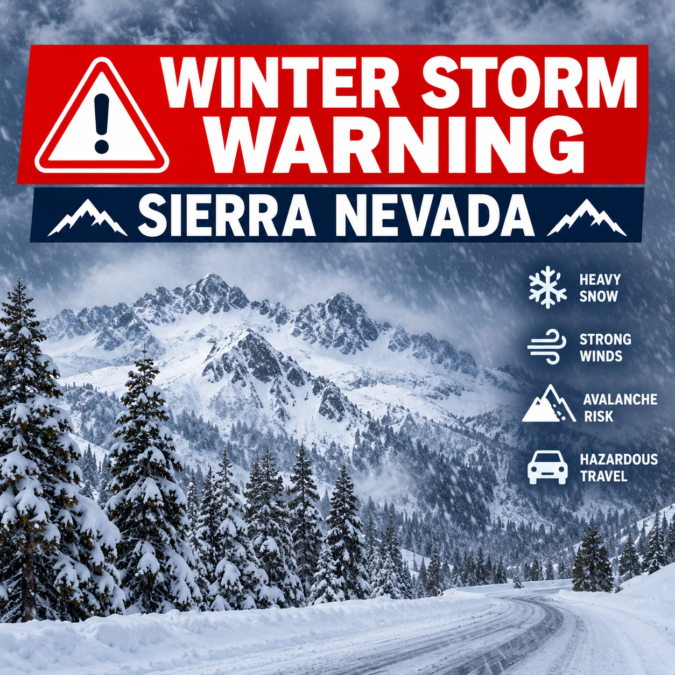

Winter Storm Warning Sierra Nevada:beautiful mountain regions in the western United States. Stretching across California and extending into parts of Nevada, this impressive mountain range is famous for its snowy peaks, scenic highways, alpine forests, ski resorts, and breathtaking winter landscapes. However, winter weather can change quickly in this region. Heavy snowfall, freezing temperatures, powerful winds, icy roads, and reduced visibility can create dangerous conditions for residents, visitors, and travelers. This is why understanding a Winter Storm Warning Sierra Nevada weather alert is so important.
Winter storms are a regular part of mountain life, but not every storm creates the same level of danger. Some weather systems bring light snow that adds a fresh layer to the landscape, while others produce heavy snowfall, strong winds, and hazardous driving conditions. Knowing how weather alerts work helps people prepare before conditions become dangerous. It also allows travelers to make better decisions about road trips, outdoor activities, and mountain visits.
A Winter Storm Warning Sierra Nevada alert is especially important for people traveling through high mountain passes, visiting Lake Tahoe, exploring national forests, or living in communities located at higher elevations. Even when lower-elevation towns experience rain, mountain communities may receive significant snowfall. Weather conditions can also vary between northern, central, and southern sections of the mountain range.
This complete guide explains how winter storm alerts work, what weather conditions people should expect, how snowfall affects transportation, and what practical steps can help keep families and travelers safe. It also explores the role of weather forecasting, emergency services, road maintenance, and local communities during winter storms.
Understanding Winter Storm Warning Sierra Nevada Alerts
A winter storm warning is an official weather alert issued when a significant winter weather event is expected or already occurring. The National Weather Service uses these alerts to communicate potentially dangerous conditions that may affect public safety. Depending on the forecast, a winter storm may involve heavy snow, freezing rain, sleet, strong winds, or a combination of several winter hazards.
When people search for Winter Storm Warning Sierra Nevada information, they are usually trying to understand whether a storm could affect their travel plans or local community. The answer depends on the location, elevation, expected snowfall, wind conditions, and timing of the weather system. Mountain weather is particularly complicated because conditions can change dramatically over relatively short distances.
A winter storm warning should never be treated as an ordinary weather update. It indicates that dangerous winter conditions are expected or happening. Residents should pay attention to official instructions, avoid unnecessary travel when conditions are severe, and prepare for possible interruptions to electricity, transportation, and communication services.
It is also important to understand that a warning is different from an advisory. A Winter Weather Advisory generally communicates that winter conditions may create travel difficulties or other inconveniences. A Winter Storm Warning communicates a more serious threat that requires stronger preparation and caution.
The National Weather Service determines which alert is appropriate based on expected weather impacts and regional criteria. These criteria can vary depending on local climate, elevation, and the type of winter precipitation expected.
The Current Winter Weather Situation in the Sierra Nevada
Winter weather conditions in the Sierra Nevada can develop quickly during the autumn and winter months. Early-season storms are especially interesting because temperatures may still be relatively mild in lower valleys while higher mountain areas begin receiving snow.
According to the National Weather Service forecast information available on October twenty-ninth, twenty twenty-six, a developing weather system is expected to bring additional precipitation and mountain snow to portions of the Sierra Nevada. A Winter Weather Advisory has been issued for higher elevations during the upcoming weekend.
The Sacramento forecast discussion indicates that snowfall is expected primarily above approximately seven thousand feet, with the snow level potentially lowering during the storm. Forecast amounts include up to several inches of snow in affected higher mountain locations, with greater totals possible near the highest peaks. The Reno forecast office has also highlighted winter weather concerns around the Lake Tahoe region and Mono County.
These forecasts are important because they show how quickly mountain conditions can change during the early winter season. Travelers should not assume that roads will remain clear simply because nearby cities are experiencing relatively comfortable autumn weather.
The current information should also be understood in its proper context. The advisory does not mean that every part of the Sierra Nevada is experiencing a severe winter storm. Conditions vary by elevation and location, and official alerts may change as new forecast information becomes available.
Anyone planning to travel through the region should check the latest National Weather Service information before leaving. A forecast published earlier in the day may no longer reflect the most recent storm development.
Why the Sierra Nevada Experiences Powerful Winter Storms
The Sierra Nevada has a geographical position that makes it particularly vulnerable to winter storms arriving from the Pacific Ocean. Moist air moves inland from the ocean and encounters the mountain range, where it is forced upward. As the air rises, it cools, moisture condenses, and precipitation develops.
This process is known as orographic lifting. It is one of the major reasons the Sierra Nevada receives substantial snowfall during winter. When a strong weather system carries abundant moisture toward the mountains, snowfall can become heavy, especially at higher elevations.
Temperature is another important factor. If the atmosphere is sufficiently cold, precipitation falls as snow. When temperatures are warmer, the same storm may produce rain at lower elevations and snow closer to the mountain peaks.
Wind direction also influences snowfall distribution. Some mountain slopes receive significantly more precipitation than others because of their exposure to incoming moisture. This means communities located relatively close to each other can experience very different weather conditions during the same storm.
The shape of the terrain adds another layer of complexity. Deep valleys, steep ridges, mountain passes, and exposed peaks influence wind speed and local snowfall. Weather forecasts therefore need to consider more than general regional conditions.
Understanding these natural processes explains why winter storm alerts are so important in the Sierra Nevada. A relatively small change in temperature or storm direction can make a substantial difference to road conditions and mountain safety.
What Areas Can Be Affected by Winter Storms?
The Sierra Nevada covers a large geographical area, and winter storms do not affect every community equally. Northern, central, and southern sections of the mountain range can experience different snowfall patterns depending on the weather system.
The northern Sierra includes areas around Truckee, Donner Summit, and portions of the Interstate Eighty corridor. These locations frequently experience significant winter weather because of their elevation and exposure to Pacific storm systems.
The Lake Tahoe region is another important area to monitor. Communities around South Lake Tahoe, Tahoe City, Incline Village, and Stateline can experience heavy snowfall, strong winds, and icy conditions during winter storms. Conditions around the lake may differ from those on surrounding mountain ridges.
Central Sierra communities and mountain passes can also experience dangerous weather. Travelers using Highway Fifty should pay close attention to forecasts, particularly when snow levels fall and temperatures drop.
Further south, areas around Mammoth Lakes, Mono County, and the eastern Sierra can experience substantial snowfall at higher elevations. Mountain roads, ski areas, and exposed locations may become difficult to access during strong winter weather systems.
It is important to remember that a regional alert does not automatically apply to every town or highway. Official warning and advisory boundaries should always be checked before making travel decisions.
The Difference Between a Winter Storm Warning, Watch, and Advisory
Weather alerts are designed to help the public understand the seriousness and timing of approaching winter conditions. However, people sometimes confuse the different alert categories.
A Winter Storm Watch generally means that significant winter weather is possible. It provides advance notice so people can begin preparing for a potentially dangerous storm. The exact timing, location, or intensity may still be uncertain.
A Winter Storm Warning means that significant winter weather is expected or occurring. The conditions may create serious travel difficulties, dangerous exposure, and other safety concerns. People should follow official guidance and avoid unnecessary trips when conditions become hazardous.
A Winter Weather Advisory communicates that winter weather may create inconvenient or hazardous conditions. Snowfall may be lighter than during a warning, but roads can still become slippery, and travel may take longer than expected.
These distinctions matter because mountain weather can become dangerous even without the highest-level alert. A relatively small amount of snow can create serious problems when it falls on untreated roads or freezes overnight.
People should never make travel decisions based only on the alert title. The detailed forecast, expected snowfall, wind speed, road reports, and local conditions provide important additional information.
Expected Snowfall Across the Sierra Nevada
Snowfall is one of the most important elements of any winter weather forecast in the Sierra Nevada. The amount of snow expected can influence road closures, ski resort operations, emergency services, and outdoor activities.
Higher elevations generally receive more snow during cold winter storms. Mountain peaks and exposed ridges may accumulate significant snowfall even when nearby communities receive much smaller amounts.
The northern Sierra often experiences substantial snowfall because moist Pacific air rises over the mountains. Areas around Donner Summit can receive heavy snow during powerful storm systems, making this region particularly important for transportation planning.
The Lake Tahoe basin also experiences changing snowfall conditions. Snowfall can vary between the lakeshore, surrounding residential areas, and higher mountain slopes. Ski resorts may receive considerably more snow than nearby lower-elevation locations.
In the central and southern Sierra, snowfall depends on storm direction, moisture availability, and freezing levels. Some weather systems bring widespread snow, while others concentrate precipitation over particular mountain areas.
Forecast snowfall totals should always be treated as estimates rather than guarantees. Weather models can change, and local terrain can produce unexpected differences. Travelers should use the latest official forecast rather than relying on an old snowfall prediction.
How Snow Levels Influence Mountain Weather
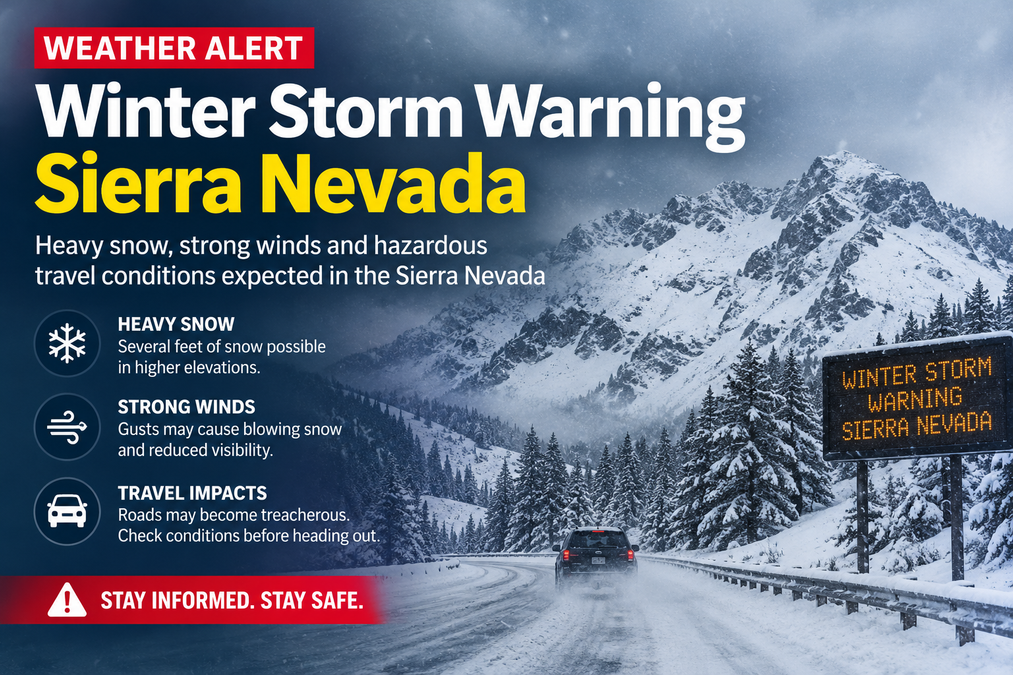
Snow levels describe the approximate elevation above which precipitation is expected to fall primarily as snow. They are among the most important details in a Sierra Nevada winter forecast.
When snow levels are high, lower mountain communities may experience rain while higher locations receive snow. This can create wet roads in valleys and snowy roads near mountain passes.
As colder air moves into the region, snow levels can fall. Areas that previously experienced rain may begin receiving snow, sometimes within a relatively short period.
This transition is particularly important for motorists. A highway that appears wet and manageable near a lower elevation may become snow-covered as the road climbs toward a mountain summit.
Snow levels can also influence water supply and seasonal snowpack. Snow falling at higher elevations contributes to the mountain snowpack, which gradually stores water that may later support rivers, reservoirs, agriculture, and communities.
People following a Winter Storm Warning Sierra Nevada forecast should always pay attention to snow levels rather than looking only at total snowfall predictions.
Strong Winds and Dangerous Mountain Conditions
Snow is not the only hazard associated with Sierra Nevada winter storms. Strong winds can create additional problems, especially along exposed ridges, mountain passes, and high-elevation roads.
Powerful gusts can blow loose snow across highways, reducing visibility and making it difficult for drivers to maintain control. In some locations, wind can create drifting snow that quickly covers previously cleared road surfaces.
High winds can also affect trees and power lines. Snow accumulation on branches combined with strong gusts may cause trees to fall, potentially blocking roads or damaging nearby infrastructure.
Mountain visitors should be especially careful around exposed ridgelines. Wind chill can make temperatures feel much colder than the actual air temperature, increasing the risk of cold-related injuries.
Outdoor recreation may become dangerous when visibility decreases or wind conditions become severe. Hikers, skiers, snowboarders, and snowmobilers should understand the risks before entering exposed terrain.
A winter weather alert should therefore be considered a warning about the entire weather environment, not simply the amount of snow expected.
How Winter Storms Affect Interstate Eighty
Interstate Eighty is one of the most important transportation routes crossing the northern Sierra Nevada. It connects communities in California and Nevada and serves commuters, commercial vehicles, tourists, and long-distance travelers.
The section around Donner Summit is particularly vulnerable to winter weather. Heavy snowfall, strong winds, ice, and poor visibility can make driving difficult.
During major storms, transportation authorities may introduce chain controls. These requirements help improve vehicle traction and reduce the risk of accidents on snow-covered roads.
In particularly dangerous situations, sections of the highway may close temporarily. Closures can occur because of heavy snowfall, collisions, avalanche concerns, disabled vehicles, or the need for snow removal.
Drivers should check road conditions before leaving and continue monitoring updates during their journey. Conditions can change rapidly, and a road that was open earlier may become unsafe later.
The California Department of Transportation provides information through its QuickMap service. Travelers can also use the statewide road information telephone service by dialing five one one.
Avoiding unnecessary travel during severe weather is often the safest choice. Waiting for conditions to improve can prevent accidents and reduce pressure on emergency response teams.
Highway Fifty and Winter Travel Safety
Highway Fifty is another major route through the Sierra Nevada. It provides access to communities, recreational destinations, and mountain areas east of Sacramento.
The highway passes through changing elevations, which means weather conditions can vary considerably along the route. Rain may occur at lower elevations while snow and ice affect higher sections.
During winter storms, drivers may encounter slippery pavement, reduced visibility, falling temperatures, and chain restrictions. These conditions require patience and careful vehicle control.
Motorists should avoid sudden braking and aggressive acceleration. Maintaining a safe following distance is especially important because vehicles require more time to stop on snow and ice.
Before traveling, drivers should check official road information and ensure that their vehicles are properly equipped. Carrying appropriate tire chains, warm clothing, water, food, and emergency supplies can make an unexpected delay more manageable.
If the forecast indicates dangerous conditions, postponing the trip is generally a better option than attempting to cross the mountains during the height of a storm.
Why Mountain Roads Become Dangerous During Snowfall
Mountain roads are more challenging than many ordinary highways because they often include steep grades, sharp curves, narrow sections, and exposed locations.
When snow begins accumulating, tires may lose traction. Even vehicles with modern safety systems can struggle when roads become icy.
Black ice is another serious concern. It forms when a thin layer of ice develops on pavement, sometimes appearing almost invisible to drivers. Bridges, shaded sections, and elevated road surfaces are particularly vulnerable.
Snow can also hide road markings, making it harder to identify lanes and road edges. During heavy snowfall, drivers may struggle to judge distances or see other vehicles.
Road maintenance crews work to improve conditions by clearing snow and applying appropriate materials. However, their work cannot guarantee that every section of a highway will remain clear during an active storm.
The safest approach is to reduce speed, avoid sudden movements, and follow all official traffic instructions.
Preparing Your Vehicle Before a Winter Storm
Vehicle preparation is essential for anyone planning to travel through the Sierra Nevada during winter weather.
Start by checking the condition of your tires. Tread depth, tire pressure, and overall tire condition influence traction. Tires that perform poorly in cold or snowy conditions can increase the risk of losing control.
Brakes should also be inspected before a mountain trip. A vehicle needs reliable braking performance when traveling down steep mountain roads.
Check the battery, windshield wipers, headlights, and heating system. Cold temperatures can place additional pressure on vehicle batteries, while dirty windshields and weak headlights can reduce visibility.
Drivers should carry tire chains that fit their vehicles and understand how to install them before reaching a chain-control checkpoint. Waiting until snow begins falling heavily is not the ideal time to learn how the equipment works.
An emergency kit is equally important. Include warm clothing, blankets, water, nonperishable food, a flashlight, a first-aid kit, a phone charger, and basic vehicle supplies.
Good preparation does not eliminate every winter driving risk, but it provides valuable protection when conditions become difficult.
Tire Chains and California Chain Controls
Tire chains are an important part of winter travel in the Sierra Nevada. They improve traction by providing additional grip on snow-covered roads.
California transportation authorities may introduce chain controls when road conditions deteriorate. These restrictions can apply to different types of vehicles depending on the weather and roadway conditions.
Some vehicles with appropriate snow tires may qualify for specific exemptions under applicable regulations, but drivers should never assume they are exempt without checking the current requirements.
Chain controls can change quickly as storms develop. Drivers should monitor official transportation updates and follow signs posted along the highway.
It is also important to select chains that are compatible with the vehicle. Incorrect equipment can damage tires, brake components, or other parts of the vehicle.
Practicing installation in a safe location before traveling can reduce stress during an actual storm. Carry gloves and a suitable surface to make the process more comfortable.
How Winter Storms Affect Lake Tahoe
Lake Tahoe is one of the most popular destinations in the Sierra Nevada. Its mountain scenery, clear water, ski resorts, and outdoor recreation opportunities attract visitors throughout the year.
Winter brings a dramatic transformation to the region. Snow covers surrounding forests, mountain roads become more challenging, and ski areas prepare for the busiest part of their season.
However, severe weather can interrupt ordinary activities. Heavy snow may affect local transportation, while strong winds can reduce visibility and create dangerous conditions around exposed mountain areas.
Communities around the lake may experience different snowfall totals because of variations in elevation and terrain.
Visitors should check weather conditions before driving to Lake Tahoe. A clear forecast in a nearby city does not guarantee safe conditions around the lake.
People staying overnight should also prepare for possible delays, power interruptions, and changes to outdoor activity schedules.
Winter storms can create beautiful scenery, but visitors should remember that mountain safety must always come before sightseeing.
Mammoth Lakes and the Southern Sierra
Mammoth Lakes is another important winter destination in the Sierra Nevada. Located in the eastern Sierra, the community is known for its mountain environment, skiing, snowboarding, and outdoor recreation.
The surrounding mountains can receive significant snowfall during active winter weather systems. Higher elevations may experience much colder conditions than the town itself.
Road access is an important consideration for visitors. Routes leading toward Mammoth Lakes can become difficult during snowstorms, especially when snow levels fall and wind conditions increase.
Travelers should monitor local forecasts and transportation updates before departing. They should also allow additional time for the journey.
Winter recreation around Mammoth Lakes requires proper equipment and preparation. Visitors should understand the risks of cold exposure, changing visibility, and unpredictable mountain conditions.
The region offers excellent opportunities for winter experiences, but safe planning is essential.
Snowfall, Ice, and Visibility Problems
Winter storms often produce several hazards at the same time. Snowfall may reduce visibility, freezing temperatures may create ice, and strong winds may blow snow across roads.
Reduced visibility is particularly dangerous because drivers have less time to recognize hazards. Heavy snowfall can make road markings difficult to see and increase the likelihood of collisions.
Ice creates another challenge. Even a road that looks relatively clear may contain slippery patches that reduce tire traction.
Freezing rain can be especially dangerous because it creates a thin coating of ice on roads, trees, sidewalks, and power lines.
Pedestrians should also take precautions. Icy sidewalks and parking areas increase the risk of falls, particularly around buildings and public spaces.
People should slow down, wear appropriate footwear, and avoid unnecessary exposure during hazardous weather.
How Weather Forecasting Helps Predict Winter Storms
Modern weather forecasting uses satellites, radar systems, weather stations, computer models, and atmospheric observations to predict approaching storms.
Satellites provide information about cloud movement, moisture, and large weather systems. Radar helps meteorologists observe precipitation and track its development.
Weather stations measure temperature, wind, precipitation, and atmospheric pressure. Mountain observations are especially useful because conditions at higher elevations can differ significantly from those in nearby valleys.
Computer models analyze atmospheric information and estimate how weather systems may develop. Meteorologists compare different model forecasts to understand possible outcomes and identify areas where uncertainty remains.
Forecasting winter weather in the Sierra Nevada is challenging because of complex terrain. Small changes in storm direction, temperature, and moisture can produce significant differences in snowfall.
This is why forecasts are updated regularly. A reliable weather report should be treated as an evolving source of information rather than a permanent prediction.
The Role of the National Weather Service
The National Weather Service is responsible for providing official weather forecasts, watches, warnings, and advisories across the United States.
Different forecast offices monitor different geographical areas. For the Sierra Nevada, important information may come from the Sacramento and Reno forecast offices, depending on the location.
These offices evaluate weather observations, forecast models, and potential impacts before issuing alerts.
The purpose of these alerts is to give people time to prepare and respond appropriately. They also help transportation agencies, emergency services, and local authorities coordinate their activities.
Residents should use official weather information rather than depending entirely on social media posts or unverified screenshots.
The National Weather Service website provides detailed forecast discussions and active alert information. Travelers can use these resources to understand what is happening in their destination area.
What to Do When a Winter Storm Warning Is Issued
When a winter storm warning is issued for your area, the first step is to understand exactly which locations are affected.
Read the complete alert rather than relying on its headline. Look for the expected snowfall, timing, elevation range, wind conditions, and potential impacts.
Next, consider whether travel is necessary. If conditions are expected to become dangerous, postpone nonessential journeys.
People who live in mountain communities should prepare their homes and vehicles before the storm arrives. Charge mobile devices, check heating systems, and make sure essential supplies are available.
Keep track of weather updates throughout the event. Forecast changes may affect the expected timing or severity of the storm.
Families should also discuss communication plans. If roads close or electricity becomes unavailable, knowing how to contact one another can reduce confusion.
Most importantly, follow official instructions from emergency management agencies and local authorities.
Home Preparation for Heavy Snow and Freezing Temperatures
People living in the Sierra Nevada should prepare their homes before significant snowfall begins.
Heating systems should be checked to make sure they operate safely and efficiently. Residents should also understand how to use backup heating equipment without creating fire or carbon monoxide hazards.
Roof maintenance is another important consideration. Heavy snow accumulation can place additional weight on buildings, especially structures that are not designed for substantial snow loads.
Gutters and drainage systems should be maintained so melting snow can move away from the property.
Outdoor water pipes may require protection against freezing temperatures. Residents should understand how to shut off water supplies if a pipe breaks.
Keep essential supplies indoors, including drinking water, food, medication, batteries, flashlights, and warm clothing.
A well-prepared home provides an important layer of protection when winter weather makes travel difficult.
Power Outages During Sierra Nevada Winter Storms
Power outages can occur during strong winter storms. Heavy snow, falling branches, and powerful winds may damage electrical infrastructure.
For residents, losing electricity during freezing temperatures can create serious difficulties. Heating systems may stop working, refrigerators may become unavailable, and communication devices may gradually lose power.
Preparing before a storm can reduce these problems. Charge phones, keep flashlights accessible, and maintain backup batteries.
Generators should always be operated outdoors and away from doors, windows, and ventilation openings. Running a generator indoors or in an enclosed garage can cause dangerous carbon monoxide poisoning.
Residents should also avoid approaching fallen power lines. A damaged electrical line may remain dangerous even when it appears inactive.
Report electrical hazards to the appropriate utility company or emergency service and follow official safety instructions.
Emergency Supplies Every Mountain Traveler Should Carry
A winter emergency kit is useful for anyone traveling through the Sierra Nevada during the colder months.
Warm clothing is one of the most important supplies. Extra jackets, gloves, hats, socks, and blankets can help protect passengers if a vehicle becomes stranded.
Food and water are equally important. Delays caused by road closures or heavy snow may last longer than expected.
A flashlight with spare batteries can help when visibility is poor or electricity is unavailable.
A first-aid kit provides basic supplies for minor injuries, while a phone charger helps maintain communication.
Drivers should also consider carrying a snow brush, ice scraper, shovel, reflective warning equipment, and suitable tire chains.
These supplies do not replace careful planning, but they can make unexpected delays much safer and more manageable.
Winter Storm Safety for Families and Children
Families traveling through the Sierra Nevada should pay special attention to children during winter storms.
Children may become cold more quickly when exposed to low temperatures, particularly when clothing becomes wet.
Dress children in suitable layers and keep extra dry clothing available. Hats, gloves, warm socks, and insulated footwear are useful during snowy conditions.
Avoid leaving children unattended in vehicles during extreme weather. A vehicle can become dangerously cold, particularly when heating is unavailable.
Families should also discuss what to do if they become separated during a crowded winter activity.
For outdoor recreation, choose activities appropriate for children’s ages and experience levels. Keep an eye on changing weather and return indoors if conditions deteriorate.
A successful winter trip is one where everyone remains comfortable, prepared, and safe.
Ski Resorts and Winter Recreation During Storms
The Sierra Nevada is home to popular ski resorts and winter recreation destinations. Fresh snowfall can create attractive conditions for skiing and snowboarding, but storms can also interrupt resort operations.
Strong winds may affect chairlift operations. Heavy snowfall can reduce visibility, while dangerous road conditions may delay visitors and employees.
Resorts monitor weather forecasts and make operational decisions based on safety conditions.
Visitors should check resort announcements before leaving. Lift schedules, mountain access, parking availability, and operating terrain can change during winter weather.
People should never assume that every trail is suitable for their experience level. Snow conditions and visibility can change quickly across the mountain.
Proper equipment, suitable clothing, and awareness of local safety instructions are essential.
Winter recreation is most enjoyable when visitors respect weather conditions and avoid taking unnecessary risks.
Avalanche Awareness in the Sierra Nevada
Avalanches are an important mountain safety concern during and after significant snowfall.
An avalanche occurs when a mass of snow moves rapidly down a slope. It may be triggered by natural factors or human activity.
Heavy snowfall can add weight to existing snow layers. Wind may also transport snow and create unstable accumulations in certain areas.
The danger can vary depending on slope angle, snow structure, temperature, and recent weather conditions.
Backcountry travelers should check the latest avalanche forecast before entering uncontrolled mountain terrain.
They should understand how to recognize dangerous slopes and carry appropriate safety equipment when traveling in avalanche-prone areas.
Training is also essential. Carrying equipment without knowing how to use it does not provide adequate protection.
People who are unfamiliar with avalanche safety should stay within managed recreational areas and follow local guidance.
How Winter Storms Affect Local Communities
Winter storms influence everyday life across Sierra Nevada communities.
Residents may experience school closures, transportation delays, business interruptions, and changes to public services.
Local businesses can also face difficulties. Deliveries may arrive late, employees may struggle to reach workplaces, and customers may cancel visits because of road conditions.
Healthcare facilities and emergency services must prepare for increased demand during significant weather events.
Communities often depend on coordination between road maintenance teams, utility providers, emergency responders, and local government agencies.
Neighbors can also support one another by checking on older residents and people who may need assistance during severe weather.
Community preparation helps reduce the impact of winter storms and improves overall resilience.
How Winter Storms Affect Tourism
Tourism is an important part of the Sierra Nevada economy. Visitors come to the region for skiing, sightseeing, mountain lodging, restaurants, and outdoor adventures.
Winter weather can create both opportunities and challenges for the tourism industry.
Fresh snowfall may attract visitors to ski resorts and winter recreation areas. Beautiful snowy landscapes can also encourage photography, sightseeing, and seasonal travel.
However, severe storms may make roads difficult to use and disrupt travel schedules.
Hotels and other businesses may need to adjust reservations and services when conditions become dangerous.
Visitors should remain flexible and avoid making plans that depend on perfect weather.
Checking official forecasts and transportation updates can help tourists make more informed decisions.
Best Ways to Monitor Sierra Nevada Weather Updates
Reliable weather information is essential during winter storms.
The National Weather Service is one of the most important sources for official forecasts and weather alerts. Its website provides local forecasts, radar information, and detailed alert descriptions.
The Sacramento and Reno forecast offices are particularly useful for monitoring different sections of the Sierra Nevada.
California road travelers should also monitor Caltrans QuickMap. It provides useful information about traffic conditions, road closures, and chain controls.
Nevada travelers should consult the appropriate state transportation resources for current road information.
Local emergency management announcements can provide additional details about community-specific impacts.
Avoid relying on old screenshots or posts without checking their publication time. Weather conditions can change quickly, and outdated information may lead to poor decisions.
The Importance of Checking Weather Before Traveling
Checking the weather before traveling is one of the simplest ways to reduce winter road risks.
A mountain trip should never be planned using only the forecast for the starting location. Drivers need to understand conditions along the entire route.
For example, a traveler leaving Sacramento may experience relatively mild weather before climbing toward the Sierra Nevada. Higher elevations may have much colder temperatures, snowfall, and stronger winds.
The destination forecast is also important. Arriving during a storm can create problems even if the road remains open.
Travelers should consider the timing of precipitation and whether temperatures are expected to fall overnight.
If conditions appear dangerous, changing travel dates or selecting an alternative destination may be the most sensible decision.
Common Mistakes People Make During Winter Storms
One common mistake is assuming that a road is safe because it was open earlier. Mountain weather can deteriorate rapidly, and road conditions may change within a short period.
Another mistake is driving without appropriate tire equipment. Vehicles that are not prepared for snow may struggle even when snowfall appears relatively light.
Some travelers also underestimate the effect of elevation. A sunny forecast in a valley does not mean the mountain passes will have similar conditions.
Ignoring chain-control requirements is another serious mistake. These restrictions are introduced for safety and should always be followed.
People sometimes rely too heavily on navigation applications without checking official transportation updates. Digital directions may not reflect every temporary closure or weather-related restriction immediately.
Finally, many travelers fail to carry emergency supplies. A short mountain journey can become a lengthy delay when heavy snowfall affects traffic.
Avoiding these mistakes can make winter travel considerably safer.
The Environmental Importance of Sierra Nevada Snowpack
Snowpack plays an important role in the environmental health and water resources of California and surrounding areas.
During winter, snowfall accumulates across mountain slopes and forms a natural reservoir. As temperatures rise in spring and summer, melting snow contributes to rivers, streams, reservoirs, and groundwater systems.
This water supports communities, agriculture, ecosystems, and recreational activities.
The amount of snow received during winter can influence water availability throughout the year.
However, snowpack conditions are influenced by more than total snowfall. Temperature, rainfall, melting rates, and the timing of storms also matter.
Warmer conditions may cause more precipitation to fall as rain rather than snow, reducing the amount of water stored in the mountain snowpack.
This makes winter weather monitoring important not only for immediate safety but also for understanding long-term water resources.
Climate Patterns and Changing Winter Conditions
The Sierra Nevada experiences considerable natural variation in winter weather.
Some seasons bring frequent storms and substantial snowfall, while others experience longer dry periods and warmer temperatures.
Large-scale climate patterns can influence Pacific storm tracks, atmospheric moisture, and regional temperature.
El Niño and La Niña are examples of climate patterns that can influence weather across parts of the western United States. However, neither pattern guarantees a particular snowfall outcome for an individual mountain location.
Climate change is also affecting winter conditions across many mountain environments. Rising temperatures can influence snow levels, snowpack duration, and the balance between rain and snow.
These changes have implications for water resources, ecosystems, transportation, and winter recreation.
Understanding long-term climate trends helps communities plan for changing conditions while recognizing that individual winter storms remain influenced by many atmospheric factors.
What Happens After a Major Winter Storm?
The end of snowfall does not necessarily mean that mountain conditions immediately become safe.
Roads may remain icy, snowbanks may reduce visibility, and fallen trees may continue blocking access routes.
Transportation crews often need time to clear snow and remove debris. Some roads may remain closed until maintenance teams can inspect them.
Residents should continue monitoring local announcements after a storm ends.
Snow removal around homes and businesses should be performed carefully. Heavy snow can cause physical strain, particularly for people who are not accustomed to strenuous activity.
Roof snow removal should be approached with caution, and professional assistance may be appropriate when accumulations are substantial.
Melting snow can also create drainage problems and slippery walkways.
Patience is important because recovery from a significant winter storm can take time.
Winter Storm Preparation for Visitors Staying in Mountain Hotels
Visitors staying in mountain hotels should understand the local weather situation before arriving.
Hotels may provide information about transportation, parking, winter equipment, and nearby services.
Guests should ask about road access and any weather-related changes to their reservation.
Keeping extra food, water, warm clothing, and essential medication available is a sensible precaution.
If a storm develops during the stay, guests should avoid unnecessary journeys and follow hotel staff instructions.
Visitors should also maintain communication with family members and inform someone about their travel plans.
A comfortable hotel stay can become stressful when roads close or weather conditions deteriorate. Preparation makes unexpected changes easier to manage.
Safe Hiking During Winter Weather
Winter hiking in the Sierra Nevada can offer beautiful scenery, but it requires additional preparation.
Snow-covered trails may be difficult to recognize, while icy sections can create dangerous footing.
Hikers should choose routes that match their experience and equipment. Weather conditions, daylight, temperature, and trail accessibility should all be considered.
Appropriate footwear, warm layers, navigation equipment, water, and emergency supplies are essential.
Always inform someone about your route and expected return time.
If snowfall, wind, or visibility begins deteriorating, turn back rather than continuing into unfamiliar terrain.
Mountain conditions can change rapidly, and reaching a destination is never more important than returning safely.
How to Protect Pets During Sierra Nevada Winter Storms
Pets also need protection during periods of cold and snowy weather.
Dogs and cats should have access to warm, dry shelter. Outdoor exposure should be limited when temperatures become dangerously low.
Animals with short coats, small bodies, or existing vulnerabilities may be particularly sensitive to cold weather.
Paw protection is important because snow, ice, and road treatment materials may irritate their feet.
After outdoor walks, check paws for ice and clean away any material that may have accumulated.
Keep enough pet food and necessary supplies available in case winter weather prevents access to local stores.
Pets should never be left in a cold vehicle for extended periods.
Understanding Weather Radar During a Winter Storm
Weather radar is a useful tool for monitoring precipitation during winter weather.
Radar images help people understand where precipitation is developing and how it is moving across a region.
Different colors on radar displays generally represent different levels of precipitation intensity, although interpretation depends on the particular radar product.
Snow can sometimes be difficult to interpret because radar signals are influenced by the type of precipitation and atmospheric conditions.
Radar should therefore be used alongside official forecasts and local observations.
Satellite images provide additional information about cloud systems and large-scale weather movement.
For ordinary travelers, the most important information is often whether significant precipitation is expected along the planned route and when it may arrive.
How Emergency Services Respond to Winter Storms
Emergency services play an important role during significant winter weather.
Police, firefighters, medical responders, road maintenance crews, and emergency management teams may coordinate their activities to respond to accidents and weather-related incidents.
Road closures can help protect motorists from dangerous conditions and give maintenance teams space to work.
Emergency responders may also assist people who become stranded or require medical attention.
Residents can help by avoiding unnecessary journeys and following road restrictions.
Keeping emergency routes clear is particularly important in mountain communities.
Preparedness from both authorities and the public can reduce the pressure placed on emergency services during winter storms.
Winter Storm Warning Sierra Nevada: Frequently Asked Questions
What Does a Winter Storm Warning Mean in the Sierra Nevada?
A Winter Storm Warning means that significant winter weather is expected or occurring in the affected area. Conditions may include heavy snow, freezing precipitation, strong winds, and hazardous travel.
People should read the full official alert to understand which locations are affected and what actions are recommended.
Is the Entire Sierra Nevada Affected by Every Winter Storm Warning?
No. Winter storm alerts usually apply to specific geographical areas and elevation ranges.
Northern, central, and southern sections of the mountain range may experience different conditions. Always check the exact alert boundaries before traveling.
How Much Snow Can Fall During a Sierra Nevada Winter Storm?
Snowfall varies depending on storm strength, moisture, elevation, and temperature.
Some systems bring only light accumulations, while stronger storms can produce substantial snowfall at higher elevations. Official forecasts provide the best available estimates for each location.
Is Interstate Eighty Safe During Winter Storms?
Interstate Eighty may remain open during some winter storms, but heavy snowfall, ice, and strong winds can create hazardous driving conditions.
Drivers should check Caltrans information before traveling and follow all chain-control requirements.
Are Tire Chains Necessary in the Sierra Nevada?
Tire chains may be required when road conditions deteriorate.
The exact requirements depend on current transportation restrictions and vehicle type. Drivers should carry compatible chains and understand how to install them.
Can Winter Storms Affect Lake Tahoe?
Yes. The Lake Tahoe region can experience snowfall, strong winds, icy roads, and reduced visibility during winter weather systems.
Conditions can differ between lakeside communities and surrounding higher elevations.
Where Can I Find Official Sierra Nevada Weather Alerts?
The National Weather Service provides official forecasts, watches, warnings, and advisories.
The Sacramento and Reno forecast offices are useful sources for different portions of the Sierra Nevada.
Should I Cancel My Mountain Trip During a Winter Storm?
That depends on the severity of the weather and official travel guidance.
If dangerous conditions are expected, postponing nonessential travel is often the safest option.
What Should I Keep in My Car During a Winter Storm?
Useful supplies include warm clothing, blankets, water, food, a flashlight, a phone charger, a first-aid kit, a snow brush, and compatible tire chains.
These items can help if traffic stops or a vehicle becomes stranded.
Why Does Snowfall Differ Between Nearby Mountain Towns?
Elevation, wind direction, terrain, temperature, and storm movement all influence local snowfall.
Two nearby communities can receive very different amounts of snow during the same weather system.
Is a Winter Weather Advisory the Same as a Winter Storm Warning?
No. A Winter Weather Advisory communicates potentially hazardous winter conditions that may create travel difficulties.
A Winter Storm Warning indicates a more serious winter weather threat. Both alerts should be taken seriously.
Can Roads Close Even After Snowfall Stops?
Yes. Roads may remain closed because of ice, snow accumulation, fallen trees, accidents, or ongoing maintenance work.
Always check current road information before continuing a journey.
Why Accurate Winter Weather Information Matters
Accurate weather information helps people make safer decisions before and during winter storms.
For mountain residents, reliable forecasts support preparation at home and help reduce unexpected disruptions.
For travelers, weather alerts provide important information about road conditions, snowfall, and potential delays.
For businesses and tourism operators, forecasts support operational planning and communication with customers.
Accurate information is especially important when conditions are changing quickly. Outdated reports may not reflect current storm intensity or transportation restrictions.
People should prioritize official sources and compare weather information with local road updates.
A few minutes spent checking reliable information can prevent unnecessary risks during a mountain journey.
Final Thoughts on Winter Storm Warning Sierra Nevada
The Sierra Nevada is a remarkable mountain region, but its winter weather deserves respect. Snowfall, freezing temperatures, strong winds, and changing road conditions can create challenges for residents and visitors throughout the colder months.
Understanding a Winter Storm Warning Sierra Nevada alert helps people recognize potential dangers and prepare before conditions become severe. It also explains why official forecasts, transportation updates, and emergency instructions are essential during mountain storms.
The current late-October forecast highlights the importance of early-season preparation. The National Weather Service has reported an upcoming period of mountain snow and issued Winter Weather Advisories for certain higher-elevation areas. Although the current advisory is not the same as a region-wide Winter Storm Warning, it still deserves attention from anyone planning to travel through affected locations.
The best approach is to stay informed, prepare vehicles and homes, carry emergency supplies, and avoid unnecessary travel when conditions become hazardous. Drivers should follow chain controls, hikers should respect mountain conditions, and visitors should remain flexible with their plans.
Winter storms are a natural part of life in the Sierra Nevada. With accurate information and sensible preparation, people can reduce unnecessary risks while enjoying the region responsibly. Safety should always come before convenience, sightseeing, or travel schedules.
Whether you live in a mountain community, commute through a high-elevation highway, or are planning a winter vacation, staying informed is one of the most valuable steps you can take.
Stay in touch to get more updates & news on New Magazine Here!