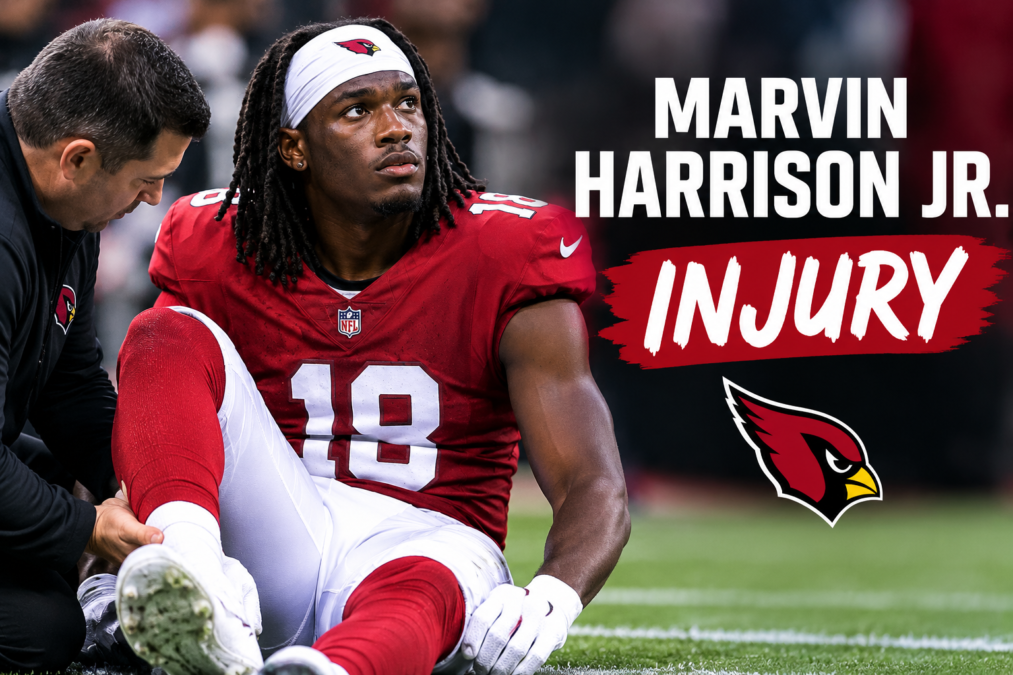

Marvin Harrison Jr. Injury has attracted significant attention from NFL fans because of his talent, potential, and the injury challenges that affected his second professional season. As a highly regarded wide receiver who entered the league with enormous expectations, Harrison was expected to become one of the most exciting young playmakers in professional football. However, injuries, missed playing time, and questions about his consistency have made his health an important topic for supporters, fantasy football players, and football analysts.
The story behind the Marvin Harrison Jr. injury discussion involves more than a single incident. During his time with the Arizona Cardinals, Harrison dealt with a concussion, emergency appendicitis surgery, and problems affecting both feet. These setbacks interrupted his development and made it difficult for him to maintain a consistent rhythm throughout the season. His situation also highlighted how physical setbacks can influence a young athlete’s confidence, preparation, and overall performance.
Harrison’s circumstances changed significantly in October 2026 when the Arizona Cardinals traded him to the Houston Texans. The move created a fresh opportunity for the talented receiver to work with his former Ohio State teammate, quarterback C.J. Stroud, and establish himself in a different offensive system. His return to action in Houston offered fans another reason to follow his progress closely.
This article explores the Marvin Harrison Jr. injury situation, his previous health problems, their effect on his performances, his recovery, and what his future could look like in the NFL. It also explains how to distinguish reliable medical and team updates from rumors, social media speculation, and unsupported claims about an athlete’s condition.
Who Is Marvin Harrison Jr.?
Marvin Harrison Jr. is an American professional football wide receiver known for his size, catching ability, route-running potential, and strong football background. He played college football for the Ohio State Buckeyes, where he developed into one of the most highly regarded wide receiver prospects in the country. His performances attracted considerable attention from NFL teams searching for a receiver capable of becoming a long-term offensive centerpiece.
Harrison was selected by the Arizona Cardinals with the fourth overall pick in the 2024 NFL Draft. The selection reflected the organization’s belief in his potential to become a leading target in its passing game. His combination of physical tools, college production, and family football heritage made him one of the most closely watched young players entering the league.
Harrison is also the son of Pro Football Hall of Fame wide receiver Marvin Harrison Sr. Although the family connection naturally attracted attention, the younger Harrison established his own reputation through his college performances. He entered the NFL with expectations that were based on his individual abilities as well as his impressive development at Ohio State.
His professional career, however, has included both promising performances and frustrating interruptions. Injuries during his second season limited his availability, while his early performance in the following season raised additional questions about his role and consistency. Understanding this background is important when evaluating the Marvin Harrison Jr. injury story without confusing medical issues with ordinary football performance concerns.
Marvin Harrison Jr. Injury: Latest Reported Status
The most important detail for readers searching for the Marvin Harrison Jr. injury update is that Harrison’s recent career developments involve both his previous injuries and his move to a new team. In June 2026, the Arizona Cardinals reported that he was still dealing with issues involving his feet following an injury-affected previous season. Those concerns came after a concussion, emergency appendicitis surgery, and separate problems involving his heel and foot. <escape>Source: Arizona Cardinals</escape>
In October 2026, Harrison was traded from Arizona to the Houston Texans. The trade was officially completed after he passed his physical, according to contemporary reporting. His new team gained a receiver with considerable potential, but his medical history remained relevant because the Texans needed to assess his readiness and help him adjust to a different offensive system. <escape>Source: NFL.com</escape>
Harrison subsequently made his Houston debut against the Jacksonville Jaguars in London. Reporting from the Houston Chronicle stated that he caught three passes for thirty-four yards on limited playing time, with each reception producing a first down. That appearance demonstrated that he was participating in games again, although one performance cannot establish that every previous physical problem has been permanently resolved. <escape>Source: Houston Chronicle</escape>
It is important to separate a player’s past injuries from a newly confirmed injury. A previous concussion or foot problem does not automatically mean that Harrison is currently injured. Likewise, playing in a game does not prove that every lingering issue has disappeared. The most dependable way to assess his present condition is to consult the Texans’ latest official injury reports, practice participation updates, and game-day status announcements.
Readers should also be cautious about interpreting a low reception total, a limited snap count, or a quiet offensive performance as evidence of a new injury. Coaches may restrict a player’s involvement for tactical reasons, particularly when he is learning a new playbook. Without an official update or reliable reporting, it would be inappropriate to assign a new diagnosis or claim that Harrison has suffered another setback.
The Concussion That Interrupted His Season
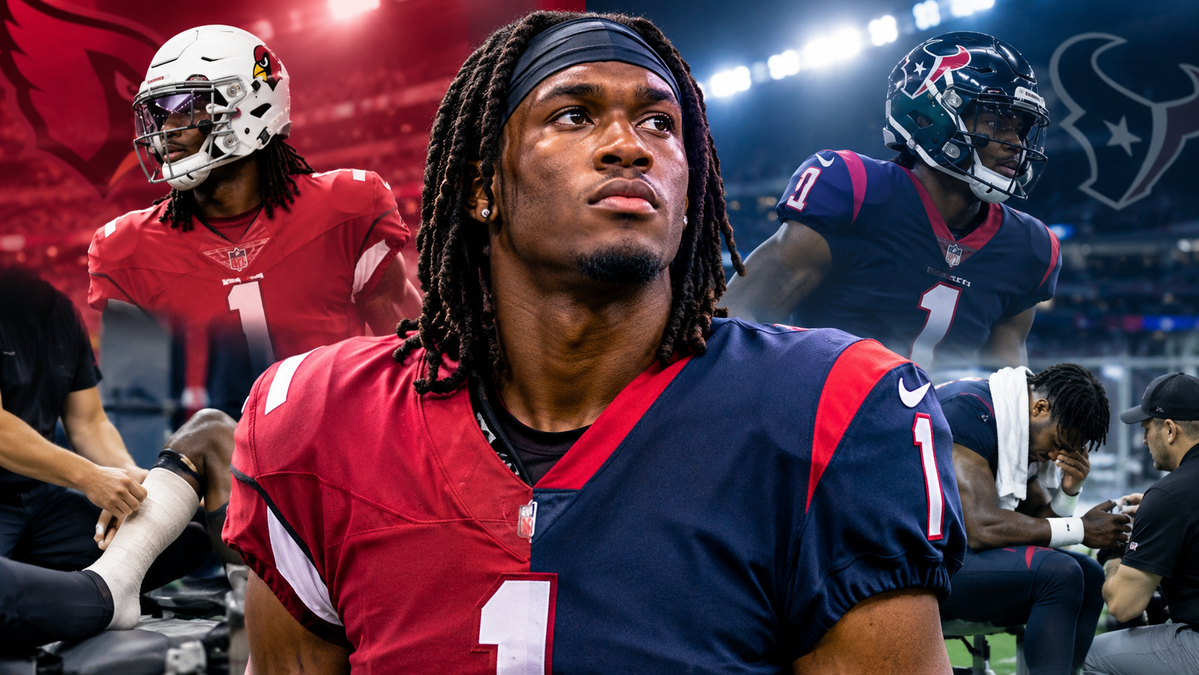
One of the most significant events in the Marvin Harrison Jr. injury timeline was the concussion he sustained during the 2025 NFL season. The Arizona Cardinals reported that the injury occurred in Week Six against the Indianapolis Colts. The concussion caused him to miss playing time and interrupted the continuity that young players often need to develop at the professional level.
A concussion is a type of traumatic brain injury that can occur following a blow to the head or body that causes the brain to move rapidly inside the skull. Symptoms can vary from person to person and may include headaches, dizziness, confusion, sensitivity to light, difficulty concentrating, or balance problems. Some symptoms appear immediately, while others may become noticeable later.
Professional football organizations use medical protocols to evaluate suspected concussions and determine whether a player can safely return to competition. A player must satisfy the applicable requirements rather than simply deciding that he feels ready to play. This approach matters because returning too early can expose an athlete to additional risks.
For Harrison, the concussion was especially frustrating because he had previously experienced a largely uninterrupted football career. During a June 2026 interview reported by the Cardinals, he explained that being unable to play for an extended period was difficult for him. His comments illustrated the emotional side of an injury that prevented him from contributing consistently.
The concussion should not be confused with his later abdominal surgery or foot problems. These were separate medical events, each requiring a different evaluation and recovery process. Taken together, however, they contributed to a difficult period in which Harrison struggled to remain on the field.
It is also important not to assume that a concussion produces permanent damage or that a player who has experienced one will necessarily suffer another. Individual outcomes vary, and only qualified medical professionals can evaluate a specific athlete’s condition. Public reporting can establish that an injury occurred, but it cannot replace a detailed medical assessment.
Emergency Appendicitis Surgery and Its Impact
Another unusual chapter in the Marvin Harrison Jr. injury story involved emergency surgery for appendicitis in November 2025. Appendicitis occurs when the appendix becomes inflamed, often because its opening is blocked. The condition can become serious and typically requires prompt medical evaluation, with surgery frequently used to remove the appendix.
Unlike a typical football injury, appendicitis is not usually caused by a tackle, collision, or strenuous athletic movement. It is a medical condition that can develop independently of sports participation. Its appearance during a demanding NFL season nevertheless created another interruption in Harrison’s preparation and availability.
Recovering from abdominal surgery involves more than waiting for discomfort to disappear. Medical teams consider wound healing, pain control, mobility, nutritional needs, and the gradual return to physical exertion. For a professional receiver, the process must also account for sprinting, sudden changes of direction, jumping, and contact with defenders.
A wide receiver’s normal training routine places substantial demands on the body. Even when an operation does not involve the legs or feet, an athlete must regain the strength and confidence required to accelerate, stop, turn, and absorb contact safely. Medical clearance and a gradual return to training help reduce the risk of unnecessary complications.
Harrison’s appendicitis surgery was one element of a season already affected by other health problems. The combined interruptions made it harder for him to establish a stable weekly routine. Instead of building on each performance, he repeatedly had to deal with the practical consequences of missing practice or competition.
This context helps explain why the Marvin Harrison Jr. injury discussion cannot be reduced to one diagnosis. His second season included several different problems, and their cumulative effect mattered as much as any individual absence. Even so, it would be inaccurate to claim that every disappointing performance was caused by injury alone.
Heel and Foot Problems Explained
Foot and heel issues became another important part of Harrison’s medical history. In June 2026, the Cardinals reported that he continued to deal with problems involving both feet following the previous season. The report described a heel issue affecting one leg and a foot injury affecting the other, making the overall recovery process more complicated.
The feet play a crucial role in almost every movement a wide receiver makes. Players rely on them to accelerate from the line of scrimmage, plant during route breaks, maintain balance while catching the ball, and generate force when jumping. Even a relatively localized problem can interfere with these movements if it causes pain or limits mobility.
Heel pain can have different causes, ranging from irritation of surrounding soft tissues to injuries involving bones, tendons, or other structures. General foot injuries can also vary widely in severity. Without a specific confirmed diagnosis, it is not possible to determine exactly which structures were affected in Harrison’s case or how serious each issue was.
The location of an injury can influence how an athlete experiences it during football activities. Straight-line running may feel different from sharp cuts, while jumping and landing can create another set of demands. A receiver might therefore feel comfortable performing some drills while still needing additional rehabilitation before returning to unrestricted football activity.
Foot and heel recovery may involve activity modification, rehabilitation exercises, appropriate footwear, strength work, and a gradual increase in training intensity. The exact treatment depends on the underlying diagnosis and the recommendations of the medical team. There is no single recovery plan that applies to every foot injury.
For Harrison, the presence of problems involving both feet made consistency particularly important. When one area is uncomfortable, athletes may sometimes alter how they distribute their weight or move. That possibility is one reason medical staff evaluate the whole movement pattern rather than focusing only on a player’s reported pain.
Still, fans should avoid assuming that Harrison’s previous foot injuries remain active at the same severity. An injury history provides useful context, but current medical status must be based on recent information. A player may recover, improve, experience lingering symptoms, or develop an unrelated problem; those possibilities should not be treated as interchangeable.
How Injuries Affected Harrison’s Performance
The impact of the Marvin Harrison Jr. injury problems can be seen in the interrupted nature of his second professional season. During his rookie campaign, Harrison recorded sixty-two receptions for eight hundred eighty-five yards and eight touchdowns. In the following season, he recorded forty-one receptions for six hundred nine yards and four touchdowns across twelve games, according to the Cardinals’ June 2026 report.
Those figures demonstrate a decline in production, but statistics alone cannot explain every reason for it. Missing games reduces opportunities to accumulate receptions and yards. Missing practice can also make it harder for a receiver to develop timing with his quarterback, refine routes, and maintain the repetition needed to execute an offense consistently.
Football performance depends on a combination of health, role, technique, communication, and opportunity. A receiver might be physically ready to play but still need time to regain confidence in a particular movement. Another player might be healthy but receive fewer targets because of changes in the offensive scheme or competition from teammates.
Injuries can also affect rhythm. Wide receivers rely on precise timing with quarterbacks, especially on routes where the ball must arrive before the receiver completes his break. When an athlete misses practice or games, those connections may require additional work to rebuild.
Harrison’s season was further complicated by the challenge of repeatedly returning to football after different interruptions. Recovering from a concussion is not the same as recovering from abdominal surgery, and neither process is identical to rehabilitating a foot injury. Each issue can require its own medical guidance and progression.
However, it would be too simplistic to attribute every statistical decline to his health. His role in the offense, the team’s quarterback situation, defensive coverage, route usage, and his own technical development also matter. A balanced assessment considers these factors together rather than treating the Marvin Harrison Jr. injury story as the only explanation for his performance.
Why Missing Games Matters for a Young Wide Receiver
Young NFL players often need consistent playing time to adjust to the speed and complexity of professional football. College offenses may differ significantly from NFL systems in their terminology, route combinations, defensive looks, and weekly preparation demands. Repetition helps receivers recognize coverage, make adjustments, and communicate effectively with quarterbacks.
When injuries interrupt that process, a player can lose valuable opportunities to build familiarity. Even after receiving medical clearance, an athlete may need additional practice to return to the same level of timing and comfort. This is particularly relevant for receivers, whose performance often depends on coordinated movement with several teammates.
Missed games can also affect how a coaching staff evaluates a player’s role. Coaches may develop plans around the players who are consistently available, and those plans can continue to influence the offense after an injured player returns. A receiver returning from an absence may need to earn a larger workload again rather than immediately receiving the same number of targets.
For Harrison, these challenges arrived during a period when expectations were especially high. Being selected fourth overall in the draft meant that fans and analysts expected him to become a major part of Arizona’s offense. That attention can make every absence, limited performance, or missed opportunity seem more significant.
Nevertheless, a difficult stretch early in a career does not automatically determine a player’s future. Development can continue after a disrupted season, especially when an athlete receives appropriate medical support, coaching, and opportunities to improve. The key is to evaluate performance over time rather than treating one season as a final judgment.
The Marvin Harrison Jr. injury history is therefore relevant to his development, but it should not define his entire identity as a football player. His college accomplishments, professional skills, and ability to adapt remain important parts of the broader picture.
Harrison’s Recovery Mindset and Approach
Recovery from a difficult season requires both physical preparation and patience. In comments reported by the Arizona Cardinals in June 2026, Harrison discussed how frustrating it had been to miss time after going through much of his earlier football career without similar interruptions. He also spoke about appreciating the opportunity to play and concentrating on getting his body ready for the season.
That attitude is understandable for a competitive athlete. Players often measure their progress through training sessions, game appearances, and improvements in performance. An injury can temporarily take away those familiar markers of progress, leaving rehabilitation as the main focus.
A professional recovery plan generally involves communication between the athlete, medical staff, athletic trainers, and coaching personnel. Depending on the injury, the process can include mobility work, strength training, conditioning, sport-specific drills, and carefully monitored increases in workload. The purpose is to restore function while avoiding unnecessary pressure to return before the body is ready.
Mental preparation also matters. Athletes may feel eager to prove themselves after an absence, particularly when public discussion focuses on their availability or production. A measured approach helps keep the focus on sustainable progress instead of rushing to meet outside expectations.
Harrison’s comments about appreciating football should not be interpreted as proof that he has completed every stage of recovery. Mindset is important, but medical clearance and physical readiness must be evaluated independently. An athlete can be motivated and disciplined while still needing time to recover from a particular issue.
For fans following the Marvin Harrison Jr. injury story, the most useful signs of progress are reliable updates about practice participation, playing status, and performance over several appearances. These indicators provide a clearer picture than speculation about how a player looks in a photograph or a brief video clip.
The Houston Texans Trade and a Fresh Start
Harrison’s move from the Arizona Cardinals to the Houston Texans became a major development in October 2026. The trade sent the young receiver to Houston in exchange for future draft selections, with the transaction becoming official after he passed his physical. The move gave Harrison a new team and a chance to continue his career in a different offensive environment.
The trade also reunited Harrison with C.J. Stroud, his former Ohio State teammate. Familiarity between a quarterback and receiver can be useful because they may already understand aspects of each other’s communication and playing style. However, college familiarity does not eliminate the need to learn a professional playbook and establish chemistry within a new offense.
Houston acquired Harrison at a point when the team was looking for ways to improve its passing game. His physical attributes and potential to make contested catches offered the Texans an additional option alongside their existing receivers. The team could evaluate how best to use him while allowing him time to learn its offensive terminology and assignments.
A trade does not automatically solve a player’s injury history or guarantee an immediate improvement in statistics. Harrison still needs to maintain his health, understand the new system, and earn opportunities within the team’s offensive plan. His transition also requires coordination with the coaching staff and quarterback.
The move nevertheless creates a new setting in which his strengths may be used differently. A change in route combinations, formations, and quarterback communication can alter a receiver’s opportunities. If the Texans find ways to use his size, catching radius, and route-running ability effectively, he may be able to rebuild momentum.
The Marvin Harrison Jr. injury discussion remains relevant in Houston because availability is a foundation for long-term development. At the same time, his future with the Texans should not be judged solely through the medical problems he experienced in Arizona. His performance, health, and fit within the new offense all deserve consideration.
What His Houston Debut Revealed
Harrison’s first appearance for the Texans came against the Jacksonville Jaguars in London. The Houston Chronicle reported that he recorded three receptions for thirty-four yards while playing twelve snaps. Each reception resulted in a first down, giving the team useful contributions from a player who had only recently joined the organization.
The limited snap count was understandable given the circumstances. Harrison had little time to learn the full offensive system before the game, and a coaching staff must decide how much responsibility to give a newly acquired player. A smaller initial role can help a receiver learn the assignments while allowing the offense to function without excessive confusion.
His debut also illustrated why raw statistics require context. Thirty-four receiving yards might appear modest compared with the expectations attached to a former fourth overall pick. However, three first-down receptions on limited playing time can represent a useful contribution, especially when the player is still learning the playbook.
The game did not establish that Harrison had reached his full potential or that all questions about his health had disappeared. It provided one encouraging data point in a longer process. Future performances, practice participation, and the team’s decisions about his workload will offer more information about his progress.
For readers looking for a Marvin Harrison Jr. injury update, the debut is evidence that he was able to participate in that game. It should not be treated as a comprehensive medical report or proof that no future issues are possible.
The more meaningful question is whether Harrison can remain available, increase his understanding of the Texans’ offense, and produce consistently over time. Those factors will help determine how quickly he becomes an established part of the passing game.
How the Texans Could Use Harrison
Harrison’s size and ability to compete for contested catches give Houston several possible options. He can potentially serve as an outside receiver who challenges defensive backs on deeper routes, works near the sideline, and creates opportunities in the red zone. His physical profile can also make him useful when the offense needs a receiver to catch the ball in traffic.
The precise role depends on the team’s offensive structure. Coaches may use different formations to create favorable matchups, move receivers across the field, or isolate a player against a particular defender. A receiver who can operate in multiple alignments offers a coaching staff additional flexibility.
Harrison’s connection with Stroud could become another advantage as their professional partnership develops. Their experience together at Ohio State may help them communicate, but they still need to build chemistry within Houston’s current system. Professional defenses present different challenges, and timing must be developed through practice and game experience.
The Texans also have other receiving options, so Harrison’s workload will depend on the broader roster. Established teammates, weekly matchups, offensive priorities, and the team’s assessment of his readiness can all affect how often he is targeted. Even a talented receiver may have quieter games when the offense focuses on other players.
If Harrison stays healthy and becomes comfortable with the system, his opportunities could expand. Consistent practice can help him refine route timing, understand defensive adjustments, and build trust with his quarterback. Those improvements may be more meaningful than expecting an immediate statistical explosion after a trade.
The Marvin Harrison Jr. injury story will remain one part of the conversation, but his long-term value in Houston will ultimately depend on what he contributes on the field. His health creates the opportunity; preparation, execution, and coaching help determine what he does with it.
Injury Reports, Practice Participation, and Game-Day Decisions
NFL injury reporting provides a structured way for teams to communicate information about player availability. During the week, teams publish practice participation information and, when applicable, injury designations. These reports help fans understand whether a player is practicing fully, participating in a limited capacity, or unable to practice because of a reported issue.
Practice participation should be interpreted carefully. A player who does not participate may be managing an injury, recovering from a medical procedure, or dealing with another circumstance identified by the team. The exact explanation depends on the official report. Fans should avoid treating every missed practice as evidence of a serious injury.
Similarly, a limited practice does not necessarily mean that a player will miss the next game. Some athletes practice on a limited basis while following a managed workload. Others may require additional evaluation before their status becomes clear. The designation and accompanying team explanation provide more useful information than speculation alone.
Game-day availability is another distinct issue. A player can practice during the week and still be ruled out, while another player can return to action after an absence once the medical staff determines that participation is appropriate. Official inactive lists provide important information shortly before kickoff.
For Harrison, these distinctions are especially important because his injury history includes several unrelated events. A current practice report should be interpreted on its own terms rather than assumed to be connected to his previous concussion, appendicitis surgery, or foot problems.
Readers searching for the Marvin Harrison Jr. injury update should prioritize official Houston Texans communications and reliable reporting that identifies the date of the information. Older articles can provide historical context, but they should not be used as proof of his current condition.
What Fantasy Football Managers Should Know
Harrison’s health and changing team situation are important considerations for fantasy football managers. His previous injuries affected his availability, while the trade to Houston introduced new questions about his role, targets, and chemistry with the quarterback. Managers should evaluate those factors together rather than relying on his draft position or reputation alone.
Availability is often the first consideration. A receiver cannot accumulate fantasy points while missing a game, and a player returning from an absence may initially receive a reduced workload. Checking the latest practice reports and official game status can help managers avoid making decisions based on outdated information.
Opportunity is equally important. Targets, routes run, playing time, and involvement in scoring situations can reveal how much a player is being used. Harrison’s early Houston appearance included limited snaps, so managers should be cautious about assuming that his role will immediately match the workload of an established starting receiver.
His potential still makes him worth monitoring. A player with his physical attributes can produce valuable results if he earns a consistent role and develops strong chemistry with his quarterback. However, potential should be weighed against current evidence, including recent production and the team’s plans for its receiving group.
Fantasy managers should also avoid diagnosing injuries from social media clips or unverified reports. A player appearing to run differently in one play does not prove that he has a medical problem. Likewise, a player who does not receive many targets is not necessarily injured.
The best fantasy approach is to use current official injury information, updated depth charts, recent usage statistics, and matchup context. The Marvin Harrison Jr. injury history is a relevant factor, but it is only one part of the decision about whether to start, bench, trade, or acquire him.
The Difference Between Injury Concerns and Performance Concerns
One reason the Marvin Harrison Jr. injury topic generates discussion is that physical availability and football production are sometimes treated as the same issue. They are related, but they are not identical. A player can be healthy and still struggle with route execution, targets, timing, or adapting to a new offense.
Performance concerns can arise from several factors. A receiver may be used primarily on deep routes that take longer to develop, leaving fewer opportunities for short receptions. Defenses may give him additional attention, or the quarterback may prefer other targets on a particular play. These factors can influence statistics even when a player is medically cleared.
Injuries can nevertheless complicate performance. Missing practice reduces opportunities to develop timing, while discomfort can affect movement and confidence. A player may also need time to regain conditioning after an absence, depending on the length and nature of the interruption.
A careful evaluation therefore asks separate questions. Is the player officially listed with an injury? Is he participating fully in practice? How many snaps is he playing? Is he running a full range of routes? How frequently is he targeted? These details help distinguish a medical concern from a tactical or developmental challenge.
Harrison’s career has included both injury-related interruptions and questions about his offensive production. Treating every quiet performance as proof of an injury would be misleading, just as ignoring his documented medical history would leave out important context.
For a fair assessment, the available evidence should be considered together. Medical reports explain known availability concerns, while film analysis and performance statistics help explain what happens during games. Neither source alone tells the complete story.
How Fans Can Follow Reliable Health Updates
Fans often encounter injury rumors through social media, discussion forums, short video clips, and headlines that emphasize uncertainty. Some reports are accurate, but others repeat old information or make assumptions based on limited evidence. Knowing where to look can help readers avoid unnecessary confusion.
The official Houston Texans website is a useful starting point for team announcements, practice updates, and game-day information. The NFL’s official website also publishes news and reports about player availability. Reputable sports journalism outlets can provide additional context, particularly when they quote team officials or identify the source of a medical update.
Publication dates matter. An article discussing Harrison’s foot issues in June 2026 may accurately describe his condition at that time, but it cannot automatically establish his status in October. Likewise, a report about his concussion in 2025 should be treated as part of his medical history rather than evidence of a new concussion.
Readers should also distinguish confirmed facts from predictions. A reporter may describe a player as someone to watch, speculate about a possible role, or discuss the likelihood of a return. Those statements are not the same as a confirmed medical clearance or official injury designation.
A useful habit is to compare the headline with the information actually provided in the article. If a headline suggests a major injury but the report only discusses reduced playing time, the body of the article may offer a more accurate explanation. Responsible reporting should make the distinction clear.
When following the Marvin Harrison Jr. injury situation, fans should focus on dated, verifiable updates. This approach provides a more dependable picture of his health than relying on rumors, recycled headlines, or unconfirmed claims.
The Psychological Side of Repeated Injury Interruptions
Physical recovery is only one part of an athlete’s experience after an injury. Missing games can also create frustration, uncertainty, and pressure to return to the level of performance expected by teammates, coaches, and fans. These reactions are understandable, particularly for young players who are trying to establish themselves in a competitive professional environment.
Harrison’s comments about the difficulty of missing time reflected how much he valued being available to play. Athletes often spend years building routines around practice, competition, and physical improvement. An unexpected interruption can make that routine difficult to maintain and force the player to focus on activities that are less visible to the public.
A return to action may also bring mixed emotions. An athlete can feel excited to compete again while remaining cautious about certain movements. Building confidence often involves demonstrating through practice that the body can perform the required tasks safely and effectively.
Support from coaches, teammates, medical professionals, and family can help an athlete navigate this period. Clear communication about recovery goals and realistic expectations may reduce unnecessary pressure. The aim is not to ignore setbacks but to approach them in a way that supports long-term development.
It would be inappropriate to make assumptions about Harrison’s private emotional state beyond what he has publicly shared. However, his reported comments provide a useful reminder that injury recovery can involve more than the physical symptoms visible during a game.
For professional athletes, maintaining perspective is important. One difficult season does not erase earlier achievements, and a temporary absence does not determine the rest of a career. Consistent preparation and appropriate medical care create the conditions for future improvement.
Could Harrison’s Injury History Affect His Long-Term Career?
A history of injuries naturally raises questions about a player’s long-term availability, but it does not provide a reliable prediction on its own. Different injuries have different causes, recovery patterns, and implications. A concussion, an appendicitis operation, and foot problems should not automatically be grouped together as evidence of one underlying medical condition.
The long-term significance of an injury depends on its nature, severity, recurrence, treatment, and the athlete’s response to rehabilitation. Some players return to their previous level of performance after an interruption, while others require more extensive management. Without detailed medical information, outsiders cannot accurately forecast an individual’s long-term health.
Harrison’s development will depend on several connected factors. Staying available for practice and games will give him more opportunities to improve his route-running and timing. A stable role in Houston’s offense could help him build continuity, while the coaching staff can adapt his workload to the team’s needs and his readiness.
Consistency may be especially valuable at this stage of his career. Repeated practice allows a receiver to understand defensive tendencies, improve communication, and become more comfortable with the quarterback. Over time, these improvements can help convert physical ability into reliable production.
It is also important to recognize that NFL careers rarely follow a perfectly straight path. Players can experience injuries, role changes, coaching changes, and difficult stretches before finding a productive rhythm. A single season, even a frustrating one, is rarely enough to determine a player’s full potential.
The most responsible conclusion about the Marvin Harrison Jr. injury history is that it deserves attention without becoming a prediction of failure. His future will be shaped by his health, performance, preparation, coaching environment, and opportunities over the seasons ahead.
What to Watch in Harrison’s Upcoming Games
The most useful indicators of Harrison’s progress will emerge over several games rather than from one isolated performance. Fans should pay attention to his participation in practice, his official game status, and whether he remains available from week to week. These details help establish whether his workload is becoming more consistent.
Snap counts and route participation can also reveal how the Texans intend to use him. A receiver may play fewer snaps while learning the offense, then gradually receive a larger role as his understanding improves. Changes in usage should be interpreted alongside the team’s tactical plans and the performance of other receivers.
Targets and receptions provide another layer of information. A growing connection with Stroud could lead to more opportunities, but target totals also depend on game situations and defensive coverage. A receiver can contribute through blocking, route spacing, and creating opportunities for teammates even when he is not the primary target on a play.
The quality of his routes is worth monitoring as well. Sharp breaks, reliable positioning, good timing, and effective work against defensive backs are important signs of development. However, detailed evaluations should rely on meaningful game footage and credible analysis rather than a single clip taken out of context.
Fans should also watch for official updates if Harrison is listed on an injury report. If a new issue arises, the team’s information should take priority over assumptions about whether it is connected to his previous foot problems or another condition.
Ultimately, the best evidence will be a sustained pattern. Consistent availability, increasing familiarity with the offense, and dependable contributions would offer a stronger indication of progress than one standout game or one disappointing statistical line.
Common Questions About Marvin Harrison Jr. Injury
What injuries has Marvin Harrison Jr. experienced?
Reports from the Arizona Cardinals described a concussion during the 2025 season, emergency appendicitis surgery in November 2025, and separate problems involving his heel and the other foot. These events interrupted his availability and contributed to an injury-affected season. The conditions were separate issues rather than one single injury.
Did the injuries affect his performance?
The injuries limited Harrison’s availability and made it harder for him to establish consistent momentum. His production declined during his second NFL season, but injuries alone cannot explain every change in his statistics. Offensive usage, quarterback timing, competition for targets, and his own development also influenced his performances.
Is Marvin Harrison Jr. still playing in the NFL?
Harrison was traded to the Houston Texans in October 2026 and subsequently made his debut for the team against the Jacksonville Jaguars. His current availability for any later game should be checked against the latest official Texans injury report and game-day announcements.
Does a previous concussion mean he will have another one?
No. A previous concussion does not guarantee that an athlete will experience another concussion. Individual risk and recovery depend on several factors, and a player’s medical team is best positioned to evaluate his condition and advise on safe participation.
Can foot injuries affect a wide receiver’s performance?
Yes. Receivers depend on their feet for acceleration, route changes, balance, jumping, and landing. Pain or restricted movement can affect those activities. However, the impact depends on the specific diagnosis and its severity, so it is not appropriate to assume that every foot injury produces the same limitations.
Should fantasy football managers avoid Harrison?
Not automatically. Managers should consider his latest health status, playing time, role in Houston’s offense, and recent production. His injury history is relevant, but decisions should be based on current information rather than past setbacks alone.
Final Thoughts on Marvin Harrison Jr. Injury
The Marvin Harrison Jr. injury story is a reminder that even highly talented young athletes can experience difficult periods in professional sports. Harrison’s concussion, appendicitis surgery, and foot problems interrupted his second season with the Arizona Cardinals and made it challenging for him to establish consistent momentum. His experience also showed how physical setbacks can influence a player’s preparation, availability, and opportunities to develop.
His move to the Houston Texans in October 2026 introduced a new chapter. Reuniting with C.J. Stroud and joining a different offensive system gives Harrison an opportunity to build a fresh working relationship with his quarterback and contribute to a new team. His debut offered an encouraging starting point, although long-term progress will depend on continued preparation, consistent performance, and reliable health updates.
The most important thing for fans to remember is that a previous injury does not automatically mean a player is currently injured. Harrison’s documented medical history deserves attention, but his present condition should be judged using current team reports rather than outdated headlines or speculation. His game availability, practice participation, and contributions over time will provide the clearest evidence of how he is progressing.
For readers following the Marvin Harrison Jr. injury situation, a balanced perspective is the most useful one. His past setbacks are an important part of his professional story, but they do not determine his future. With appropriate medical support, consistent preparation, and a clear role in Houston’s offense, he has an opportunity to continue developing and demonstrate the ability that made him such a highly regarded prospect.
Stay in touch to get more updates & news on New Magazine Here!